
Geophysics
How Agile Software Empowers Better Surface Decisions
How Agile Software Empowers Better Surface Decisions As geological research becomes increasingly complex, the tools used to collect, analyze, and…

Seisware is now a part of Computer Modelling Group Ltd.

In the oil and gas industry, true integration between geoscience and engineering has been recognized as essential for making more reliable subsurface decisions. Geoscientists interpret seismic data, characterize geology, and quantify uncertainty. Engineers translate subsurface models into forecasts, well designs, and developmental plans. When experts from different backgrounds collaborate, they offer diverse perspectives that drive innovation while pushing the boundaries of what’s possible.
However, this potential is easily disrupted when teams are not working from the same information foundation. Innovation depends on exchanging ideas, but that exchange only works when everyone is working from consistent data, tools, and assumptions. In practice, many breakdowns stem not from unwillingness to collaborate but from fragmented tools, inconsistent data, and domain-specific language. These structural barriers can be misinterpreted as personal disagreement when teams are struggling with misaligned information environments.
What causes these discussions to veer into frustration? Oftentimes, it’s a lack of shared information. Without full visibility into each other’s data, assumptions, and constraints, conversations become strained and progress stalls. In these situations, the challenge is informational misalignment, not interpersonal tension. Effective integration across geoscience and engineering requires more than conversation; it requires shared visuals that eliminate ambiguity, expose assumptions, and ensure teams are making decisions from the same information base.
Even when teams work within the same domain, differences in background and expertise can result in important details being misunderstood or overlooked. Without clear communication and shared context, information can be “lost in translation” as it moves between departments. When this happens, assumptions drift, models diverge, and decisions are made on incomplete or inconsistent interpretations of the subsurface. These disconnections can lead to misjudged risk, suboptimal well designs, and development plans that don’t fully reflect geological reality.
Engineers and geoscientists each work with different datasets and analytical processes, but they are ultimately working toward a shared purpose: understanding the subsurface to guide exploration decisions, assess new regions, optimize well placement, and evaluate development opportunities. What appears critical to one person may seem irrelevant to another; not because of a lack of value, but because each group applies the data differently. A geophysicist may interpret an amplitude anomaly or update a velocity model to refine depth and reservoir quality, while a drilling engineer translates those same inputs into pore‑pressure/fracture‑gradient estimates, casing points, mud weight, and BHA design.
Without a shared understanding of the broader context, these parallel interpretations can become disconnected, and teams may miss how individual insights contribute to the overall picture. Leveraging one another’s data, expertise, and interpretation is what enables a more complete and accurate understanding of the subsurface and missing any piece limits the team’s overall potential.
In today’s technology-driven workplace, much of the technical communication between subsurface teams occurs through structured presentations and shared files. These tools allow each discipline to contribute to its own data, interpretations, and updates, but they also introduce risks when information is presented without enough clarity, context, or supporting visuals. These gaps are not trivial: engineering and drilling decisions influence operational safety, environmental risk, and ultimately the public. For this reason, communication quality is not just an internal workflow issue but a material factor in decision‑making.
Even when teams work together regularly, miscommunication can still occur when information is shared without the underlying context that shapes it. When technical outputs are summarized, files may contain a mix of historical snapshots, preliminary interpretations, and updated analyses, but without clear framing, it can be difficult for recipients to know which insights are current. As a result, individuals must reconstruct context on their own and distinguish current decisions from outdated information. That reconstruction may be incomplete or inaccurate, leading to small errors, as we are aware of within this field, which can escalate into costly consequences.
Inaccurate reconstructions also create another issue where individuals will naturally prioritize the pieces that appear most relevant to them from their own perspective. Engineers, geoscientists, and drilling specialists each evaluate data through the lens of their discipline objectives, constraints, and mental models. A geoscientist may key in on structural or seismic cues, while a reservoir engineer may focus on pressure behavior and flow trends. Drilling teams may look at the same information mainly in terms of operational risk. When there isn’t a shared understanding, differing priorities can lead teams to emphasize certain details while overlooking others.
Geoscience is central to decisions that directly affect drilling optimization, completion effectiveness, production forecasts, induced seismicity responses, and ultimately, an operator’s bottom line. As Oreskes (2020) notes, experts must communicate clearly within their domain while respecting the knowledge and decision authority of other professionals. When communication fails, the consequences quickly become operational, financial, and environmental. Even minor communication gaps can result in multi-million-dollar losses.
Another aspect that operators need to acknowledge is that individuals approving budgets, signing off on landing zones, and green-lighting frac designs often don’t have geoscience backgrounds. These professionals bring their expertise to every well they touch, but they still depend on previous data to make their decisions. If any of that data is unclear, scattered across multiple tools, or missing context, decision-making either gets delayed due to uncertainty or teams create designs that don’t fully capture the geological opportunity.
Good data visualization becomes essential in closing these communication gaps. Clear visuals help non-geoscientists make sense of complex subsurface information. A well-designed visual communicates your point more efficiently than paragraphs and emails. Decision makers ultimately need information they can understand quickly and feel confident using. Without that confidence, even strong recommendations struggle to gain traction. Uncertainty-aware plots, evidence-based comparisons, and forecasts that link to operational outcomes are what they’re looking for. Effective communication means speaking their language, and in most organizations, that language is a concise, high signal dashboard that brings all the critical information into a single, coherent view.
SeisWare Mercury was built to solve this communication gap. It unifies seismic, geological, and petrophysical interpretation, completions, and production data into one environment. This allows both geoscience and engineering teams to have a shared view of stage-level performance drivers and risk. Instead of asking engineers or leadership to sift through scattered data or writeups, Mercury delivers clear visuals, uncertainty-aware analytics, and integrated seismic-completions context in a format decision-makers trust. The goal is the same as yours, to translate complex geoscience into actionable, evidence-based insight that support faster, higher confidence decisions across the organization.
SeisWare Mercury is available immediately. For more information, visit seisware.com or contact info@seisware.com.
Share this post
How Agile Software Empowers Better Surface Decisions As geological research becomes increasingly complex, the tools used to collect, analyze, and…
Calgary, AB – May 7, 2026 — SeisWare is excited to announce a new integration with Nanometrics that brings high-fidelity…
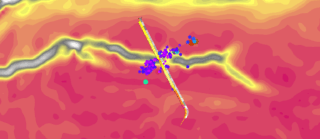
SeisWare Launches Mercury™, a Unified Analytics Platform Delivering Stage-Level Intelligence for Modern Well Development Calgary, AB – January 27, 2026…
Our free monthly newsletter gives you access to our most valuable tools, resources, and insights without the unnecessary extras.

"*" indicates required fields

"*" indicates required fields
"*" indicates required fields
"*" indicates required fields